





The endowment effect and companies’ decisions on asset ownership
.
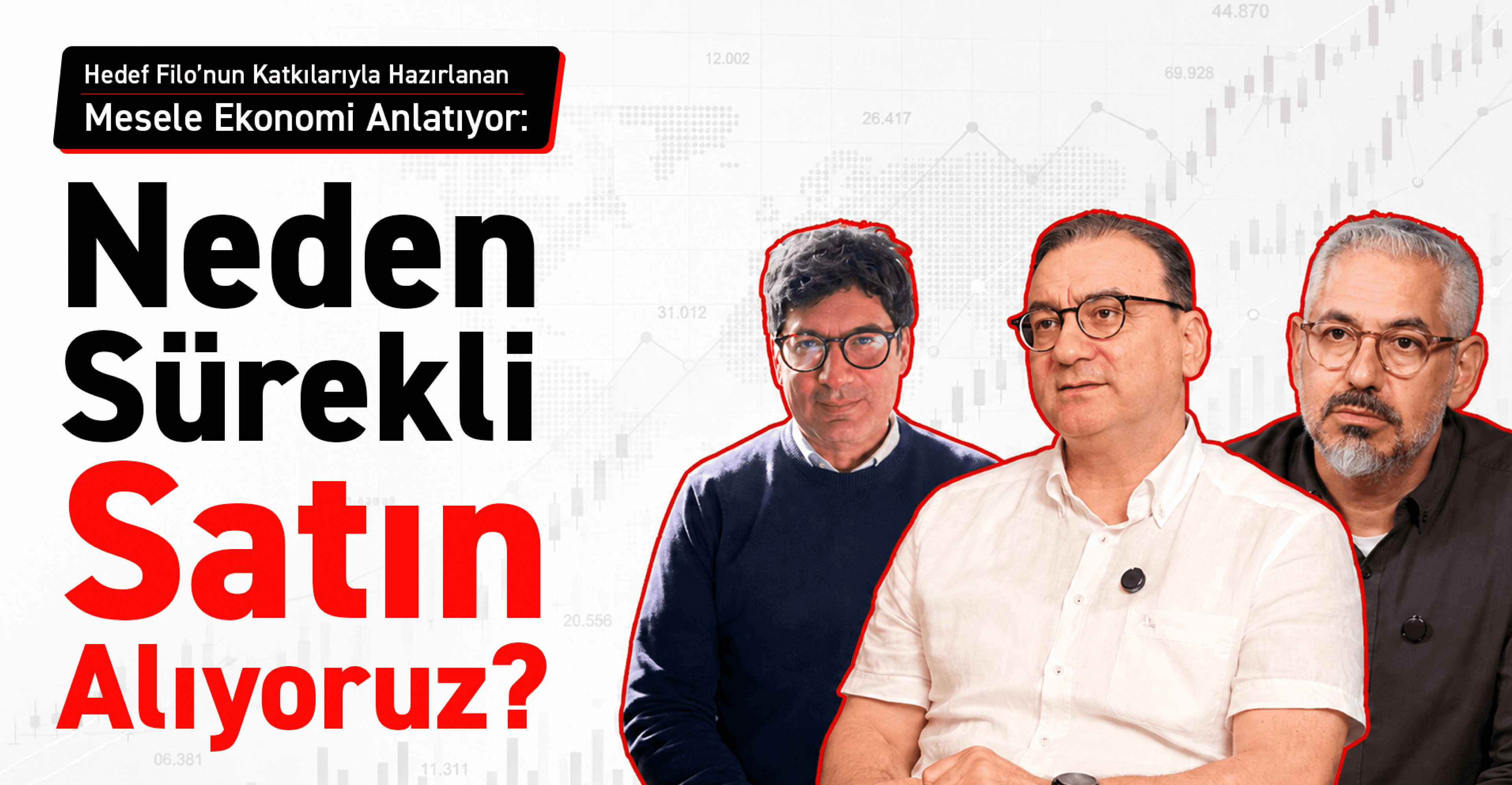
What is the endowment effect, and why do we tend to overvalue the assets we own? We examine the invisible cost this behavior creates on corporate balance sheets.
A digital streaming platform’s monthly subscription fee is TRY 380. The price of digitally purchasing a single film included in the same package, meaning owning it permanently, is TRY 180. The math seems clear at first glance: the film becomes yours, and it is cheaper. Yet most of us still choose the subscription.
This comparison now appears in every area of life, and the issue is not limited to digital subscriptions. From the bicycle you ride to the scooter you use, from the car you drive to the music you listen to, from your daily grocery shopping to your company’s accounting software, ownership is changing shape. In the first episode of the “Mesele Ekonomi Anlatıyor” series, we talked about the cost of money; in this episode, we look at the other half of the equation: behavior.
Below, we examine why consumption is shifting from ownership to access, the “endowment effect” that distorts our perception of value as soon as we own something, and how this effect translates into an unpriced cost in companies’ asset decisions.
There is an obvious technological reason behind this transformation. Products and services that we once had to purchase physically can now be accessed with nothing more than a mobile phone. As the cost of access falls, the advantage provided by ownership also decreases.
On the other hand, the economics of the matter comes into play. Today, the cost of having a product or service for a short period has become much more affordable than permanently owning the same product. Viewed in the short term, this is an entirely rational decision for the individual.
But does this mean, “I’m keeping my money in my pocket”? In fact, it is not that simple. Through the signals we are constantly exposed to, products that we would never have consumed in the past, perhaps products we could not have afforded to consume economically, have now become part of our monthly credit card statement or monthly loan payments. Items that are cheap individually turn into a fixed expense that is anything but cheap when taken together.
The moment we own something, our perception of it changes. There is a name for this in behavioral economics: the endowment effect. In short, when you own something, you place a higher value on it than you would if you did not own it.
The study that demonstrates this effect most clearly is the mug experiment. One group of students is given a mug and asked to spend time with it during the day. The other group is given nothing. The two groups are then asked about the price: those without a mug are asked, “How much would you pay for this mug?” while those who have a mug are asked, “How much would you sell this mug for?”
The picture that emerges is this: those who own the mug state a significantly higher price, while those who do not own it state a lower one. In the 1990 study by Daniel Kahneman, Jack Knetsch, and Richard Thaler, the median price sellers demanded was $7.12, while the price buyers were willing to pay was $2.87. The same mug was valued at more than twice the price depending on whose hands it was in.
The economic implication of this is important: an efficient trade does not take place; the market fails to function efficiently. Because the seller side places a price above the average.
But why? Because they attach meaning to the mug. Since they use the mug throughout the day and it also carries the university logo, a sense of belonging emerges. What increases its value is not the mug itself, but the relationship established with it.
Let’s take this approach beyond the mug and apply it to everyday consumption items, starting with the largest one. According to TÜİK data, 29.3% of household consumption expenditure in 2025 went to housing and rent, while transportation ranked second at 20.5%. In other words, nearly half of the budget is concentrated in two categories in which we make a decision about ownership or access.
Housing holds a special place in all of our lives. For some, it means security; for others, investment; for others, a basic need for shelter; and for some, a form of ownership that is no longer within reach. In Türkiye, a home is above all a place to live; the place where people feel safe. But this sense of security is not only physical; it is also seen as economic security for the future.
In fact, housing functions as a supplementary social security system. Someone who owns a home to live in says, “At least if we can cover the cost of food, we can sustain our lives.” Someone who owns a second or third home sees it as an additional pension. For this reason, in Türkiye, a home means a place to live, shelter, and economic security.
There is no indication of a decline in interest in real estate or a change in the trend. For generations, we have lived predominantly in an inflationary country. Capital markets often failed to deliver the expected returns, while instruments such as gold rose and fell. At the end of the day, the most tangible type of asset, one that also provides people with a sense of psychological comfort, remained real estate—and it still does.
Following the pandemic, policies that saw subsidized housing loans as a way to provide an economic lifeline once again fueled demand. Negative real interest rates that followed triggered the instinct to turn toward tangible assets to escape inflation. As these factors piled up, real housing prices rose significantly, and society began to experience an affordability problem in housing.
Assessing consumption and ownership solely through housing can be misleading. For many families, purchasing a home stems from the need for shelter; there is also an investment dimension, and there is land underneath it.
Transportation, which ranks second on the list, is a completely different story. One-fifth of the budget goes there, but there is no land underneath that expenditure item. On the corporate side, the same question is asked at the fleet level: should you purchase the vehicle and tie up capital in it, or acquire the right to use it through long-term vehicle leasing?
Now think about the other things we want to own: equipment, office furniture, computers, software licenses. None of these have land underneath them. The moment they leave the dealership, are taken out of the box, or are installed, they begin to lose value—and they lose a little more every year.
But we want both in the same way. In both cases, we say, “I want this to be mine.” We transfer the sense of security we associate with housing to depreciating assets as well. But let’s take a step back for a second and ask a bigger question: why do we want to own so many things?
Economic theory operated for a long time on a clear assumption: we derive our happiness, that is, our utility, from consumption. Roughly speaking, the more we consume, the happier we become. This assumption also sends a message to policymakers; as the economy grows, consumption increases and living standards rise.
What is different today is this: we are exposed to far more signals and are trying to access more than we need. This is also why behavioral economics and financial literacy have come to the forefront in recent years.
In recent times, economists have been able to use regressions based on life-satisfaction data to measure which expenditure items make whom how happy. The result is not surprising but is instructive: spending on experiences such as travel, concerts, and theater significantly increases life satisfaction. A negative correlation, meanwhile, is observed with health and education expenditure. The explanation is that these expenditure items evoke the feeling in people of, “Why do I have to pay for this?”
The conclusion that follows from this completes the question at the beginning of the article. What produces happiness is not owning something, but benefiting from it. The endowment effect does exactly the opposite: it makes us hold on to even things we do not use. This reflex strains the budget for individuals, while for companies it is directly reflected on the balance sheet.
A person who says, “I want to own a home, I don’t want to be a tenant” in order to feel secure and a company that says, “We want our own building, we want our own fleet” are actually making the same statement: the same reflex, the same search for security. There is no behavioral difference between the student in the mug experiment and a company that struggles to dispose of the vehicles in its fleet. This effect appears on the corporate side in five areas:
In concrete terms, it generally looks like this: a vehicle in the fleet is driven far fewer kilometers per year than expected, while its maintenance and insurance continue to be paid, but it has not been sold for three years because “it won’t sell at this price.” Since the vehicle’s utilization rate does not appear in any report, no one has to justify this cost. At the end of three years, the vehicle is worth less, and that capital has also done nothing for three years.
This picture can also be seen among the world’s most valuable companies. The wealthiest companies of the past owned enormous factories, tankers, and miles of land. Today, the balance sheets of the most valuable companies do not contain buildings or vehicles that they own; they either acquire them as a service or lease them. The rationale behind this decision is not emotional, but economic.
The endowment effect is not a management mistake; it is part of human nature. The problem is that when you are unaware of it, it creates a cost that does not appear in any table. On the fleet side, this calculation is particularly sharp because a vehicle is both one of the largest items in the budget and an asset that loses value from the very first day.
That is why the question needs to change. Instead of asking, “Should I own this asset?” asking, “What does owning this asset provide me, and can I obtain the same benefit without owning it?” is the first step toward putting scarce capital in the right place.
And the crucial question remains: does owning or consuming something really make us happier, or does the pleasure we get from it last only until the moment we open the box? You can watch the episode “Why Do We Want to Own?”, where we examine this question together with economists and behavioral scientists, on the Hedef Filo YouTube channel.
